

Releasing Equity to Buy a Second Home
Buying a second home can be an exciting prospect. It can serve as a holiday retreat or be a home for family members. One way to fund this is by releasing equity to buy a second home.
This article will help you understand how to use equity release to buy another property. We will look at the options, benefits, and important things to think about.
What Does Releasing Equity Mean?
Releasing equity allows you to unlock some of the value tied up in your home. Your property’s value may have gone up over the years. This can give you extra funds without selling. You can use these funds to buy a second home or for other investments.
Two main ways to release equity exist:
Remortgaging current property or apply for a new mortgage: Borrowing more against your property by refinancing your mortgage.
Equity Release: You can access the value of your home with a lifetime mortgage. This option is usually for people aged 55 and older.
Why Release Equity to Buy a Second Home?
Releasing equity to buy a second home is a popular option for several reasons:
Avoids Selling Your Current Home: You can keep your existing home while funding another property.
Flexible Financing: Use the released funds for a deposit, renovation costs, or even to purchase a property outright.
Options for Releasing Equity
Here’s a closer look at the two main ways to release equity to buy a second home:
Remortgaging or new mortage
If you have a good credit score and a stable income, remortgaging might be a practical option. By remortgaging, you increase the loan amount on your current property and use the extra funds for your second home.
Benefits:
- Typically lower interest rates compared to equity release.
- Retain full ownership of both properties.
- Suitable for homeowners of any age with a steady income.
Things to Consider:
- You need to ensure that the monthly repayments fit your budget.
- Your eligibility depends on passing affordability checks.
- Interest rates may fluctuate if you opt for a variable-rate mortgage.
Equity Release
Equity release is a popular choice for homeowners aged 55 or older. With a lifetime mortgage, you can borrow a percentage of your home’s value. Unlike remortgaging, there are no monthly repayments unless you choose to pay off the interest.
Benefits:
- No income checks or affordability assessments.
- You don’t have to make monthly repayments (interest rolls up instead).
- Suitable for retirees or those without a regular income.
Things to Consider:
- Interest compounds over time, which reduces the value of your estate.
- Some providers may not allow funds to be used for purchasing a second home.
Ensure you work with a provider that is a member of the Equity Release Council to receive consumer protections


Steps to Release Equity for a Second Home
If you’re considering releasing equity to buy a second home, follow these steps:
Step 1: Understand Your Financial Situation
Start by assessing how much equity you have in your current property. Use an online equity release calculator or speak to a financial adviser to get an estimate.
Step 2: Decide on a Method
Choose whether to remortgage or use equity release based on your age, income, and long-term goals.
Step 3: Compare Lenders and Products
Shop around for the best mortgage rates or equity release plans. An independent broker can help you compare options and find a plan tailored to your needs.
Step 4: Speak to a Solicitor
You’ll need legal advice to finalise the paperwork and ensure you understand the terms of your agreement.
Step 5: Purchase Your Second Home
Once the funds are released, you can use them to buy your second property. Be clear on any tax implications, such as stamp duty, especially for additional properties.
Key Considerations When Buying a Second Home
Stamp Duty: In the UK, buying a second home usually incurs higher stamp duty rates. Be sure to factor this into your budget.
Running Costs: A second home comes with additional expenses, such as utilities, insurance, and maintenance.
Impact on Inheritance: If you use equity release, think about how it will change the value of your estate. It may also affect any inheritance you want to leave.
Equity Release vs. Remortgaging: Which is Best?
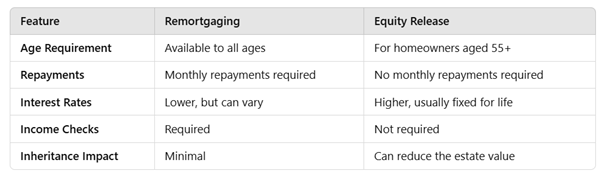
Releasing equity to buy a second home can be a smart financial move, but it’s essential to weigh the pros and cons. If you are unsure, talking to an independent financial adviser can help. They can guide you in exploring your options. This will help you make the right choice for your future.


